
Squirrel Removal in Toronto
Get Free Quote
Fill out the form below and we’ll get back to you within 24 hours
entry points
Common Toronto Entry Points
Roof Vents: Builder-grade plastic or thin aluminum roof vents are no match for a squirrel’s teeth. They chew right through the louvered plastic to get into the warm attic.
Soffit Intersections: The area where a lower roofline meets the siding of a second story is highly vulnerable. Squirrels push up the aluminum soffit panels or chew the wood fascia behind it.
Roof Edges (Drip Edge): In older Toronto homes with deteriorating roof sheathing, squirrels chew right through the roof decking at the edge of the shingles, often directly above the eavestrough.
Plumbing Mats: The rubber or lead gasket around the plumbing stack pipe on your roof. Squirrels chew through the rubber, squeezing down the side of the pipe into the attic.
The "Double Baby Season" Factor
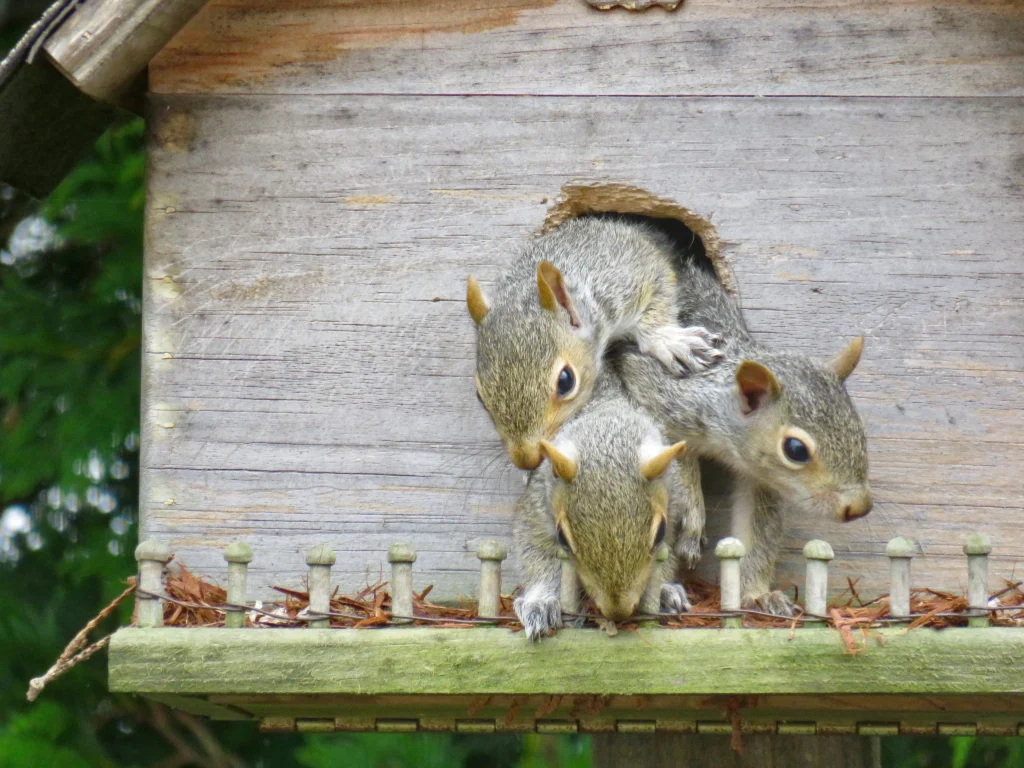
Squirrels in Toronto have two breeding seasons: spring (March to May) and late summer (August to September).
If you hear squirrels in your attic during these months, you almost certainly have a nest of babies. Squirrel babies are hairless, blind, and immobile for several weeks.
If a pest control company simply installs a one-way door on the entry point, the mother will be locked out, and the babies will slowly die in your attic. The mother squirrel will also cause massive damage to your roof chewing through shingles and plywood trying to get back to them.
Our humane approach to baby squirrels:
During baby season, we physically enter the attic, locate the nest (usually buried deep in the insulation near the soffits), and remove the babies by hand. We place them in an insulated reunion box on the roof next to the one-way door. When the mother exits the one-way door, she finds her babies in the box and carries them, one by one, to her secondary den in a nearby tree.
Squirrel sign
Signs of a Squirrel in Your Attic
Light, rapid scratching
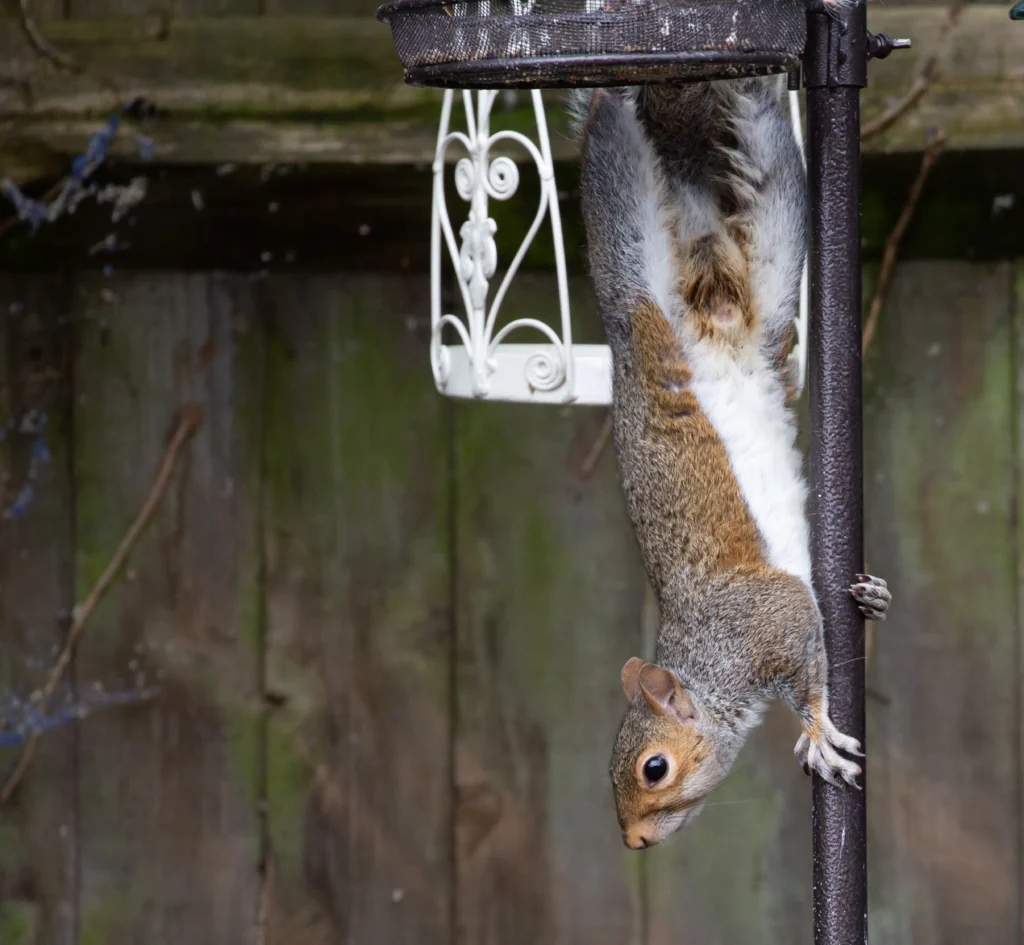
Unlike raccoons, which sound like heavy thumping at night, squirrels sound like frantic scratching and scurrying.
Daytime activity
Squirrels are diurnal (active during the day). You will hear them leaving the attic at dawn to forage, and returning at dusk. (Mice and raccoons are active at night).
Rolling noises
The sound of acorns or walnuts rolling across the drywall ceiling above your bedroom.
Exterior damage
Visible chew marks on wood fascia, chewed plastic roof vents, or a hole the size of a baseball at the roof edge.
Squirrel Removal
Our Squirrel Removal & Exclusion Process
Inspection
We conduct a full roof inspection to locate the main entry point and any secondary gaps. We also inspect the attic for wiring damage and babies.
One-Way Door
We install a small, squirrel-specific, heavy-duty steel one-way door over the main hole. The squirrel can push its way out to forage, but cannot get back in.
Reinforcement
We wrap the area around the door in 16-gauge PVC-coated galvanized steel mesh. Without this, a frustrated squirrel will just chew a new hole two inches away from the door.
Removal & Sealing
After 3–5 days, we return, verify the squirrels are gone, remove the one-way door, and permanently seal the hole with steel mesh and roofing sealant.
screening
Preventative Roof Vent Screening
Squirrels are territorial. When we lock a squirrel out of your attic, she will often run across your roof to the next plastic roof vent and try to chew her way in there.
To prevent this “whack-a-mole” problem, we highly recommend preventative screening. While we are on your roof, we can install heavy-gauge steel mesh covers over all your vulnerable roof vents, plumbing mats, and exhaust vents, essentially squirrel-proofing your entire roof.
Squirrel Patterns
Toronto Neighbourhood Squirrel Patterns
The Annex, High Park, Rosedale: Massive mature trees overlapping complex, multi-peaked rooflines of older homes. Squirrels here have easy access to roofs and exploit aging woodwork. Tree trimming (cutting branches back at least 6 feet from the roof) is critical.
East York, Scarborough: Classic post-war bungalows and 1.5-story homes. Squirrels commonly enter through plastic roof vents or chew through the wood fascia behind the eavestroughs.
Leslieville, Riverdale: Attached and semi-detached homes. A squirrel in a shared wall or continuous attic space can affect multiple homeowners. We often coordinate with neighbours to seal the entire roofline.
Frequently Asked Questions
Can I just put rat poison in the attic to kill the squirrel?
Will the City of Toronto help with squirrels in my attic?
Can't I just trap the squirrel in a cage and drive it to a park?
How much does squirrel removal cost in Toronto?
Does home insurance cover squirrel damage to my roof and wiring?
Related Services
Get Squirrel Removal in Toronto Today
Don’t let Squirrel take over your property. Our professional pest control team in Toronto is ready to provide fast, effective, and long-lasting solutions.