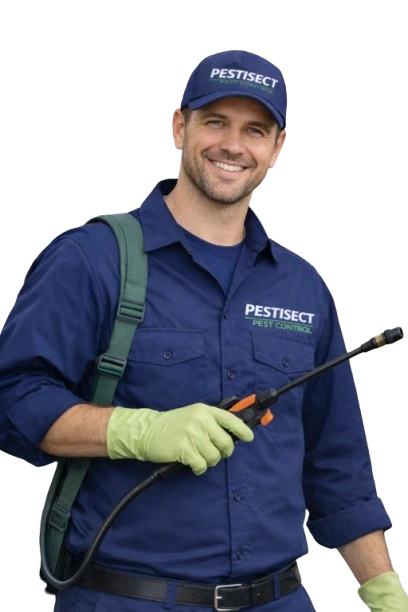
Ant Exterminator Services in the GTA
Get Free Quote
Fill out the form below and we’ll get back to you within 24 hours
About ants
The Problem With Generic Ant Control
Most store-bought ant sprays don’t work and some make infestations worse. When worker ants are killed at the surface, many species interpret this as a threat and split into multiple satellite colonies (a process called “budding”). The problem spreads from one nest to five.
Professional ant control starts with species identification. The ant species determines the colony structure, the nesting behaviour, and which treatment will actually eliminate the infestation versus scatter it.
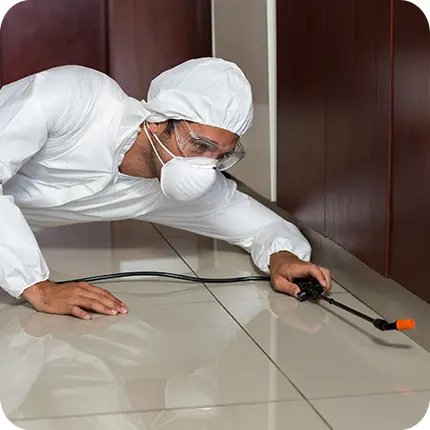
Pestisect’s licensed technicians identify the exact species active in your home, locate nesting sites (including hidden ones inside walls and under flooring), and apply species-specific treatment that eliminates the colony not just the surface workers you can see.
ant colony
What is Ant Colony Budding?
Budding is a survival mechanism used by certain ant species (most notably Pharaoh ants) where queens and workers leave the main colony to establish multiple new satellite nests in response to environmental stress, such as the application of chemical sprays.
Professional ant control starts with species identification. The ant species determines the colony structure, the nesting behaviour, and which treatment will actually eliminate the infestation versus scatter it.
Pestisect’s licensed technicians identify the exact species active in your home, locate nesting sites (including hidden ones inside walls and under flooring), and apply species-specific treatment that eliminates the colony not just the surface workers you can see.
- Only 10% of an ant colony’s population leaves the nest to forage. Surface sprays only kill this small fraction, leaving the queen completely unaffected.
- A mature Carpenter Ant colony can consist of up to 10,000 workers
- Pharaoh ants are documented carriers of over a dozen pathogenic bacteria in hospital and restaurant settings.
Common ants
Ant Species Common in GTA Homes
Different ant species require different treatment approaches. Here are the most common ants we encounter.
Pharaoh Ants (Monomorium pharaonis)
Treatment Approach: Slow-acting gel bait placed at foraging trails ever spray them. Spraying pharaoh ants causes immediate budding and dramatically worsens the infestation.
Carpenter Ants (Camponotus spp.)
Where They Nest: Moist or previously water-damaged wood — window frames from past leaks, basement beams, wood near plumbing, decks, and stumps near the home
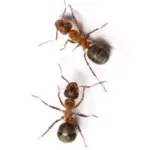
Pavement Ants (Tetramorium caespitum)
Where They Nest: Under pavement slabs, sidewalks, driveways, and along foundation walls. They enter homes through cracks in concrete and expansion joints.
Signs of an Ant Infestation
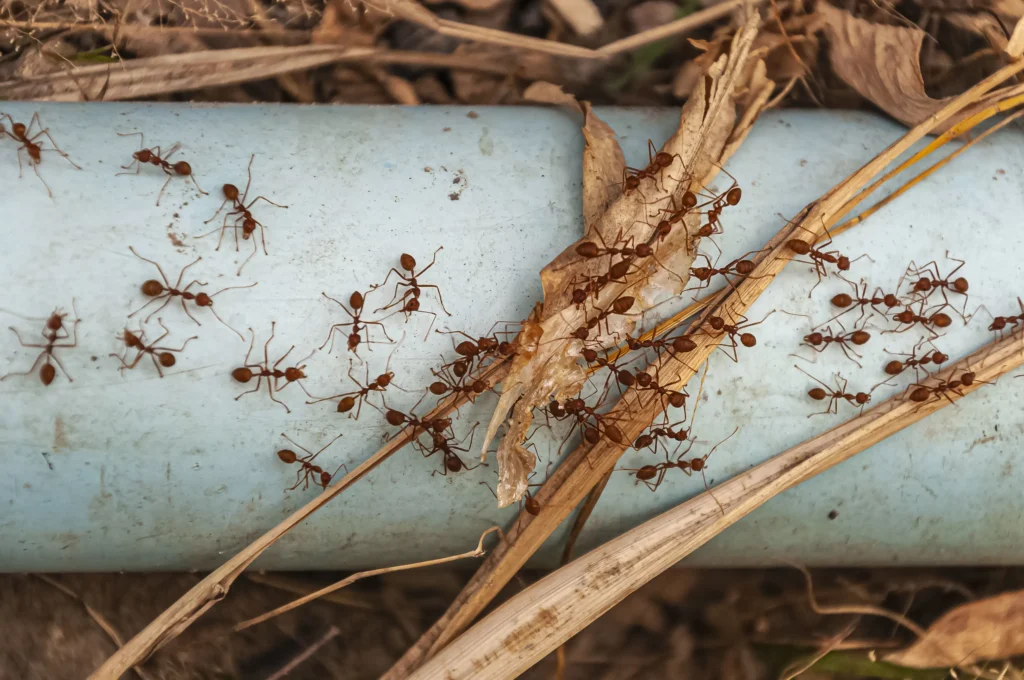
Visible trails
Lines of ants leading to food sources or wall gaps
Sawdust-like frass
Near window frames, baseboards, or beam ends (carpenter ants)
Colony "wars"
Clusters of ants fighting on driveways in spring (pavement ants)
Winged ants
Inside the home in spring indicates an established colony nearby
Small yellowish ants
in kitchen areas (pharaoh ants in warm buildings)
Ant damage
Small piles of excavated wood material near carpentry
Ant Infestations
Prevention Tips Between Treatments
Keep clean
Wipe pet food bowls between meals; clean grease from stove surfaces
Remove wood debris
Stumps, woodpiles, and debris near the home attract carpenter ants
Seal all food
Use airtight containers; clean up spills immediately
Fix moisture sources
Leaking pipes, condensation on plumbing, wet basement wood
Caulk foundation gaps
Expansion joints and cracks where ants enter
Trim vegetation
Branches and shrubs touching walls act as ant highways
OUr ant Control Process
How We Eliminate Ant Infestations
Our systematic approach ensures complete elimination of ant colonies and long-term prevention.
Identification
Your technician identifies the ant species by size, colour, and behaviour — often within the first few minutes of inspection.
Colony Tracing
We trace foraging trails back to the nesting site — inside walls, under slabs, in moist wood, or in exterior soil — and identify all active entry points.
Targeted Treatment
Treatment is 100% specific to the identified species. Pavement ants get perimeter spray; carpenter ants get dust injection and moisture assessment; pharaoh ants get slow-acting bait protocols only.
Prevention
We identify and recommend corrections for the conditions attracting ants to your home: - Sealing foundation cracks and expansion gaps - Addressing moisture issues (carpenter ants) - Trimming vegetation touching the structure - Correcting food storage and garbage practices
Areas We Serve
Service Areas for Ant Extermination
Related services:
Frequently Asked Questions — Ant Control
Why do I get ants every spring?
Can I spray ants myself to get rid of them?
How long does ant treatment take to work?
Do ants come back after treatment?
How do I know if I have carpenter ants or regular ants?