
Ant Exterminator in Brampton
Brampton is growing fast and the ants have noticed.
New subdivisions going up across Castlemore, Mount Pleasant, and Heritage Heights are disturbing ant colonies that have been in the soil for years. Construction crews pour fresh concrete, grade new lots, and move on. But the colonies that were displaced during excavation don’t leave. They relocate usually to the nearest warm structure with cracks they can get through. That structure is your new home.
Meanwhile, in Brampton’s established communities Heart Lake, Bramalea, Madoc aging trees and older housing are giving carpenter ants exactly the kind of moist, settled wood they prefer.
Pestisect treats ant infestations across all of Brampton. We’re based in the Peel Region, our technicians know the neighbourhoods, and we start every call the same way: by identifying the species before we do anything else.
Get Free Quote
Fill out the form below and we’ll get back to you within 24 hours
ant problem
Two Bramptons, Two Ant Problems
New-Build Brampton: Pavement Ants and Foundation Gap
If your Brampton home was built in the last 10 years, your ant problem probably started before you moved in.
Here’s what happens: Builders pour foundations, install utility lines, and lay down concrete driveways and walkways. Each of those steps creates joints, seams, and penetrations in the building envelope. In a new build, many of these gaps haven’t fully settled, sealed, or caulked. Pavement ants the small dark ones that trail along your basement wall exploit these gaps immediately.
The new-build ant pattern we see most in Brampton:
- Ants appearing in the first spring or summer after moving in
- Trails running along the top of the basement wall or around the garage-to-house door
- Activity concentrated near the front walkway, driveway, or patio slab
- The builder says “it’s normal” — and they’re partly right. It’s common, but it’s not something you should live with.
What we do: Exterior perimeter treatment along the foundation, interior crack-and-crevice application at identified entry points, and sealing of accessible gaps. We also advise on what to bring up with your builder if construction-related gaps are the root cause because some foundation issues may be covered under your Tarion new-home warranty.
Established Brampton: Carpenter Ants and Mature Trees
If your Brampton home is in a neighbourhood with established trees Heart Lake, Bramalea, Central Brampton, Sandringham carpenter ants are the likely suspect.
Carpenter ants need two things: wood and moisture. Older Brampton homes provide both. Decades of rain, minor leaks, and settling create pockets of softened wood around window frames, in basement headers, and behind exterior cladding. The mature trees that line older Brampton streets are often the primary colony site carpenter ants nest in dead wood inside living trees, then send workers into adjacent homes through branches touching the roof or siding.
The carpenter ant pattern we see in established Brampton:
- Large black ants (6–13mm) appearing indoors between March and June
- Most active at night — you might see them in the kitchen at 11pm but not during the day
- Coarse sawdust-like material (frass) accumulating near baseboards or window sills
- A mature tree within 15 metres of the house, often with visible deadwood in the canopy
What we do: We locate the primary colony often inside a wall void or beam using borescope-guided inspection. We treat with dust injection directly into the gallery system. We also check for satellite colonies (carpenter ants often maintain 2–5 satellite nests in addition to the primary colony) and assess the moisture source that attracted them in the first place.
Common Ants Found in Brampton
Ant Species in Brampton Homes
Types of ants you may encounter
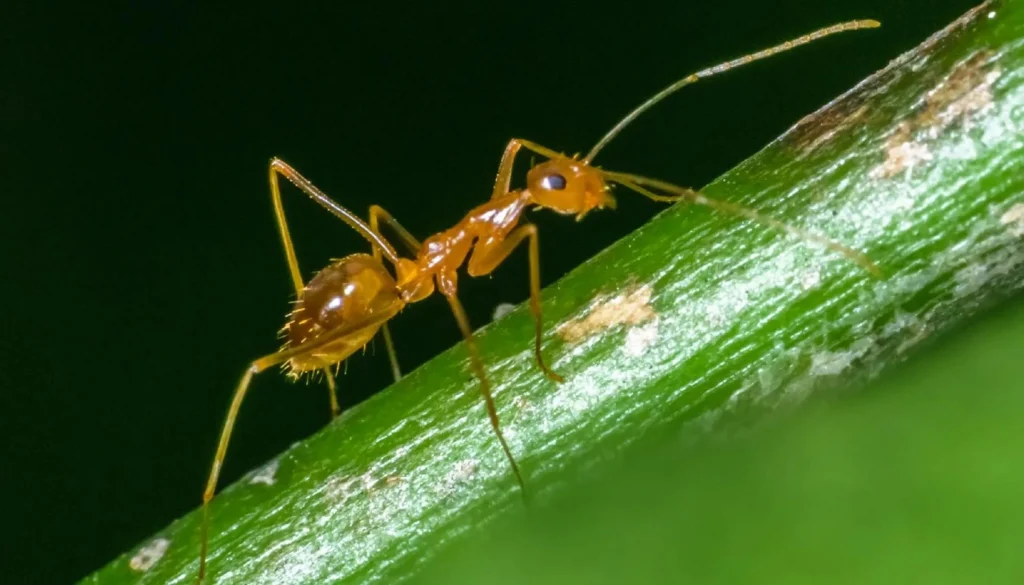
Pavement Ants (Tetramorium immigrans)
What they look like: Small (3–4mm), dark brown to black. They trail in visible lines along walls, counters, and the edges of floors.
Why Brampton has so many: Brampton’s rapid suburban expansion since 2010 has meant hundreds of thousands of square metres of new concrete driveways, garage pads, walkways, and patios. Every piece of new concrete has expansion joints and settling gaps that pavement ants use as entry points. Construction also disturbs established soil colonies, pushing them toward the nearest heated structure.
What they do: Pavement ants are a nuisance, not a structural threat. They forage for grease and sugar, and they’ll set up trails to any food source they find in your kitchen. They don’t damage wood or wiring they’re just persistent.
How we treat them: Perimeter spray along the foundation exterior, crack-and-crevice treatment at entry points inside, and gap sealing where possible. Results visible within 3–5 days.
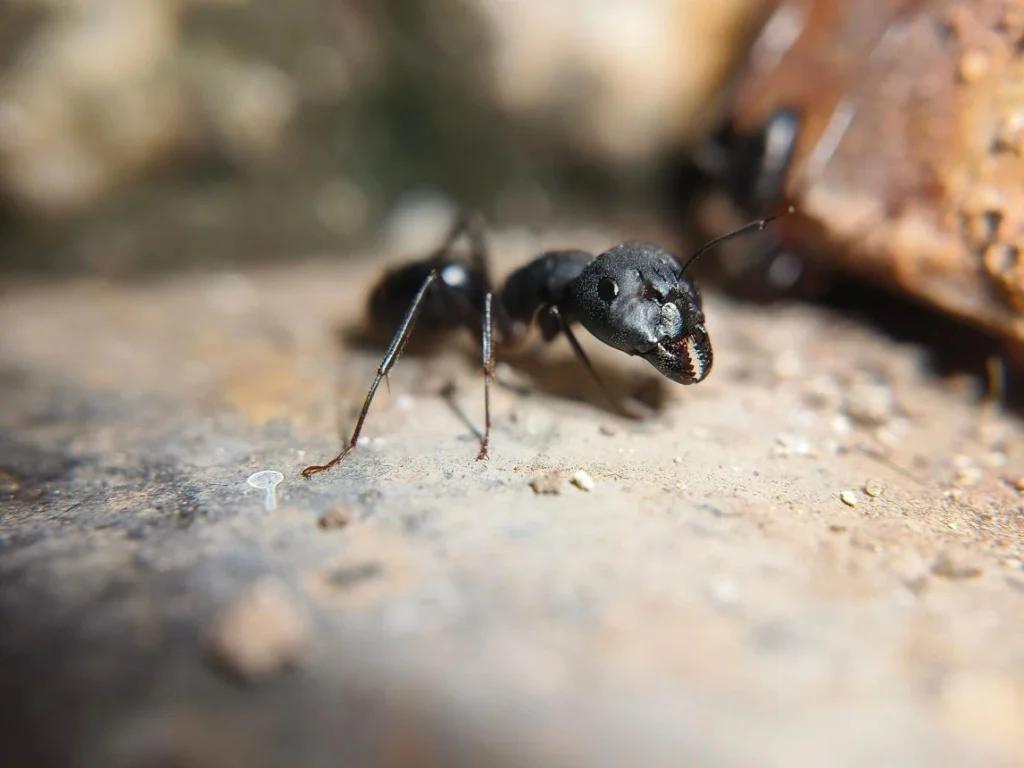
Carpenter Ants (Camponotus pennsylvanicus)
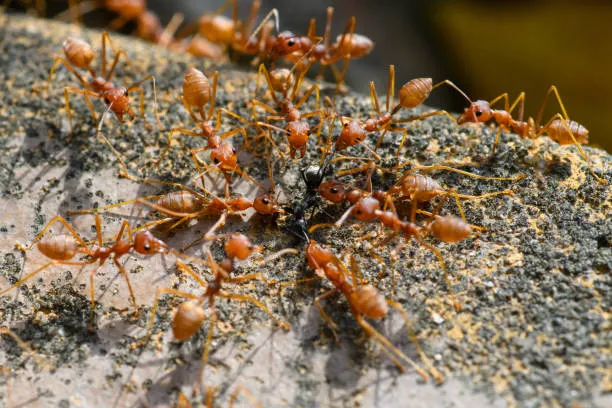
What they look like: Large (6–13mm workers, queens up to 25mm). Black, sometimes with a reddish-brown midsection. Noticeably bigger than any other ant you’ll see in your home.
Brampton-specific risk factors: Mature trees in older neighbourhoods, homes near Heart Lake Conservation Area and Professor’s Lake with proximity to wooded land, and any home that’s had water damage — even minor — around windows or in the basement.
What they do: They excavate wood to build nesting galleries. They don’t eat the wood; they remove it. Over years, a colony can compromise window frames, floor joists, and structural beams.
How we treat them: Dust injection into wall galleries, treatment of all satellite nesting sites, exterior perimeter spray, and a moisture assessment. We also recommend trimming any tree branches within 3 metres of the roofline — these act as ant highways.
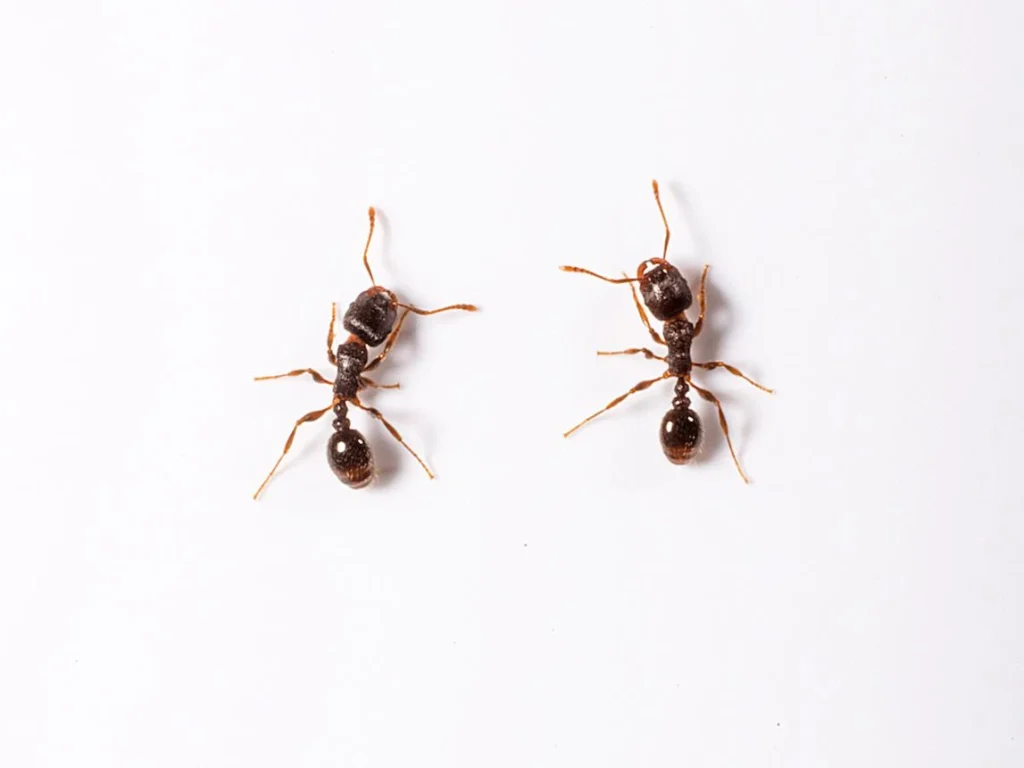
Pharaoh Ants (Monomorium pharaonis)
What they look like: Very small (1.5–2mm), yellowish to light amber. You’ll see them near kitchen sinks, dishwashers, and bathroom pipes anywhere warm and damp.
Where they show up in Brampton: Pharaoh ants are most common in Brampton’s multi-unit townhome complexes and apartment buildings particularly the large rental and condo developments along Hurontario, Queen Street, and near Shopper’s World. They travel between attached units through shared wall cavities and plumbing chases.
The rule that matters most: Never spray pharaoh ants. Contact insecticide causes colony budding the queens split off and establish new colonies in separate parts of the building. What was one colony becomes three or four. We’ve responded to calls in Brampton townhome rows where one tenant sprayed and three adjacent units developed infestations within a month.
How we treat them: Gel bait only. Slow-acting bait that workers carry back to all queens. Full colony collapse takes 4–8 weeks. There’s no shortcut — faster products trigger budding.
Our Ant Extermination Process
Our Ant Treatment Process in Brampton
At Pestisect, we follow a proven step-by-step approach:
Arrive and Identify (First 10 Minutes)
Your technician identifies the species on arrival. We don't assume. Carpenter ants, pavement ants, and pharaoh ants each require completely different treatments — and using the wrong one can make things worse.
Trace the Source
We follow foraging trails back to their origin — inside wall voids, under concrete slabs, or through utility penetrations. For carpenter ants, we use a borescope to look inside walls and locate gallery systems without cutting drywall.
Treat the Colony, Not Just the Surface
The ants you see on your counter are workers maybe 5% of the colony. The colony is inside the wall, under the slab, or in the soil. Our treatments reach the colony itself: - Pavement ants: Perimeter spray + crack-and-crevice at entry points - Carpenter ants: Dust injection into wall galleries + all satellite nests treated - Pharaoh ants: Gel bait protocol only — zero spray
Seal and Prevent
We seal accessible entry points and provide a written list of conditions contributing to the infestation — moisture sources, vegetation contact, and construction gaps that may need attention.
Guarantee
If the ants come back during the warranty period, we come back. No charge, no debate.
Signs of Ant Infestation
Brampton Neighbourhood-Specific Ant Advice
treatment costs
What Ant Treatment Costs in Brampton
Book an inspections. Written quotes before any work starts. No surprises.
Service
Typical Range
Frequently Asked Questions — Ant Control in Brampton
How quickly can Pestisect eliminate ants?
Most infestations are controlled within a few days, but complete elimination depends on colony size and species.
Are your treatments safe for pets and children?
Yes, we use eco-friendly and approved treatments that are safe when applied properly.
Can ants come back after treatment?
Without proper prevention, ants can return. That’s why we focus on long-term solutions.
Do you offer same-day service in Brampton?
Yes, we provide fast and emergency ant extermination services.
How much does ant control cost?
Pricing depends on infestation severity and property size. Contact Pestisect for a free quote.
Related Services in Toronto
Book Your Brampton Ant Inspection
The sooner you call, the smaller the colony is when we get there. That’s not a sales pitch it’s biology.
Call: (647) 924-2753
Email: in**@*******ct.ca
Available: 7 days a week, 8am–8pm
Serving: All Brampton neighbourhoods