
Ant Control in Toronto
You see a line of ants marching across your kitchen counter. You spray them. They come back the next day or worse, they show up in the bathroom too.
That’s not a coincidence. Most ant treatments fail because they kill the workers you can see and completely ignore the colony producing them. In Toronto, that colony could be living inside your walls, under your foundation, or in the moist wood around a window frame you assumed was fine.
Pestisect is a licensed pest control company based in the GTA. We don’t do generic “spray and hope” treatments. Every ant call starts with a species identification because the species tells us where the colony is, how it reproduces, and what will actually destroy it versus what will accidentally make it split into five new colonies.
Get Free Quote
Fill out the form below and we’ll get back to you within 24 hours
ant problem
Why Toronto Has So Many Ant Problems
The housing stock matters
Toronto has roughly 280,000 detached and semi-detached homes, and a significant portion were built before 1970. These older homes especially in neighbourhoods like the Annex, Cabbagetown, Leslieville, and Roncesvalles have aging wood framing, original window casings, and decades of settling that create gaps in the foundation. Carpenter ants treat moist, partially decayed wood in these structures as prime nesting habitat.
High-rise density drives pharaoh ant problems
Toronto has more residential high-rises than any other North American city. Pharaoh ants the small yellowish ones you see near kitchen sinks and bathroom pipes thrive in heated buildings with shared plumbing. They travel between units through wall voids, pipe chases, and electrical conduits. One infested unit in a 15-storey building can seed colonies across multiple floors. We've seen this happen in buildings near Yonge & Eglinton, the St. Lawrence Market area, and CityPlace.
Pavement ants follow the concrete
Toronto's extensive network of sidewalks, driveways, and parking pads creates perfect habitat for pavement ants. They nest in soil beneath concrete slabs and enter homes through expansion joints and foundation cracks. These are the small dark ants you see trailing along your basement wall every spring.
Seasonal pressure is predictable. Ant activity in Toronto follows a reliable annual pattern:
- March–May: Carpenter ants emerge from overwintering colonies. This is when Toronto homeowners notice large black ants indoors — usually near bathrooms, kitchens, or wherever there’s been moisture.
- June–August: Pavement ant colonies are at peak activity. You’ll see them swarming on driveways and sidewalks, and foraging trails enter homes through ground-level cracks.
- September–November: Pharaoh ant complaints spike as buildings switch to heating. Warm indoor air activates colonies that were less visible during summer.
Common Ants Found in Toronto
The Three Ant Species We Treat Most in Toronto
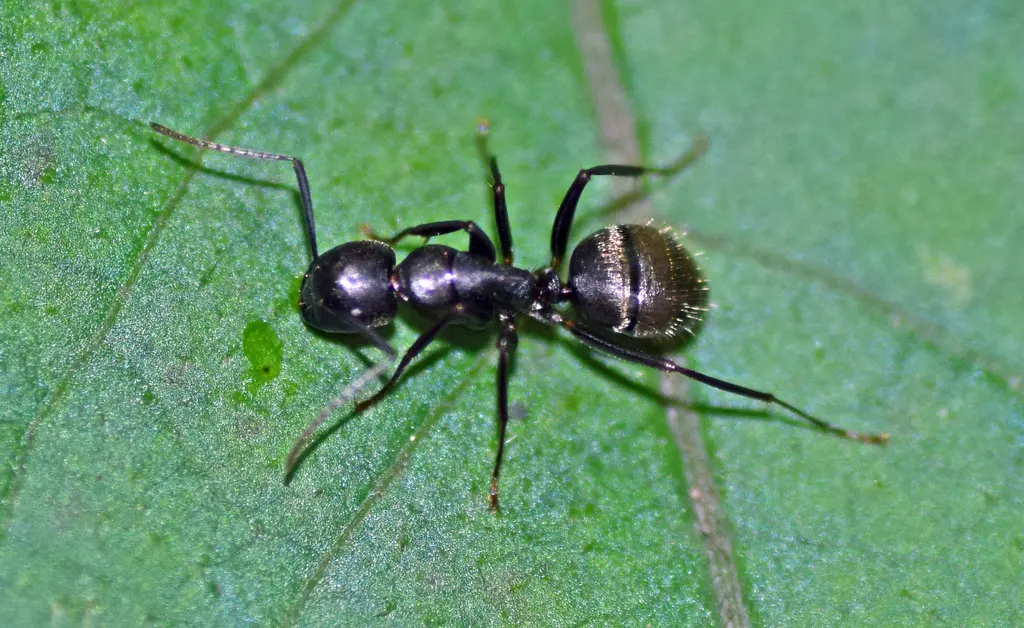
Carpenter Ants — Toronto's Most Damaging Ant
What they are: Carpenter ants (Camponotus pennsylvanicus) are the largest ants in Ontario workers measure 6–13mm and queens can reach 25mm. They’re black, or black with a reddish midsection.
How they damage homes: Carpenter ants don’t eat wood. They excavate it. They hollow out moist or partially decayed wood to build gallery systems for their colony. A mature colony of 3,000 to 10,000 ants can cause real structural damage over several years weakening window frames, floor joists, and support beams.
What to look for in Toronto homes: If you find coarse sawdust-like material (called frass) near baseboards, window frames, or where the wall meets the ceiling that’s excavated wood mixed with dead insect parts. It means there’s an active colony in the wall or beam nearby.
Where they nest in Toronto specifically:
- Victorian and Edwardian homes in the Annex and Cabbagetown with original wood window casings
- East York bungalows with finished basements that trapped moisture behind drywall
- Scarborough homes near the Rouge River and Highland Creek where mature trees overhang rooflines
- Beach neighbourhood homes with decks and porches showing signs of wood rot
Why DIY fails: Spraying the ants you see on the countertop does nothing to the colony inside the wall. Carpenter ants have one primary nest and up to five satellite colonies you need to find and treat all of them.
Our treatment: Dust injection directly into wall galleries using borescope-guided application. We locate every nesting site, not just the obvious one. We also assess the underlying moisture problem that attracted them because if you don’t fix the moisture, they’ll come back.
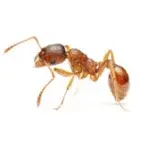
Pharaoh Ants — Toronto's Most Mishandled Ant
What they are: Pharaoh ants (Monomorium pharaonis) are tiny — only 1.5–2mm — and yellowish to light amber. They’re almost exclusively an indoor pest in Ontario.
Why Toronto apartments are ground zero: Pharaoh ants need warmth, moisture, and access to food scraps. Toronto’s condominium and apartment inventory roughly 350,000 apartment units across the city provides exactly that. They travel through warm pipe chases, electrical boxes, and wall voids. A single pharaoh ant colony can have multiple queens, meaning it can bud (split) into new colonies under stress.
The critical rule you need to know: Never spray pharaoh ants. When you spray a pharaoh ant colony with contact insecticide, the surviving queens interpret it as a threat and split off to establish new colonies in different parts of the building. What was one colony becomes four. We’ve seen this happen in condos near Square One, Liberty Village, and the St. Lawrence Market. Tenants sprayed, and within weeks, neighbouring units had ants too.
Our treatment: Slow-acting gel bait placed at foraging trails and inside wall voids near identified nesting areas. The bait is carried back to the colony and shared with all queens. It takes 4–8 weeks for a pharaoh ant colony to fully collapse this timeline is intentional. Faster-acting products don’t reach the queens.
What building managers should know: In Toronto multi-unit buildings, pharaoh ant control requires a coordinated approach treating the affected unit alone rarely works. We provide building-wide assessment protocols and work directly with property management to coordinate treatment across affected floors.
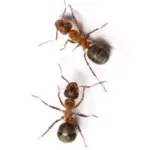
Pavement Ants — Toronto's Most Common Ant
What they are: Pavement ants (Tetramorium immigrans) are small — about 3–4mm — and dark brown to black. They’re named for their habit of nesting under pavement, sidewalks, and concrete slabs.
Why they’re everywhere in Toronto: Toronto has one of the densest concentrations of concrete infrastructure of any Canadian city. Every driveway, front walkway, and parking pad is a potential pavement ant nesting site. They enter homes through the gap between the concrete and the foundation wall a gap that widens every winter as freeze-thaw cycles shift the soil.
Where we treat them most often:
- Older Toronto row houses with shared driveways and no caulking at foundation penetrations
- North York and Etobicoke homes with concrete walkways poured directly against the foundation
- Any Toronto home with a finished basement the ants enter at ground level and trail along the top of the basement wall
How we treat them: Targeted perimeter spray along the foundation exterior, plus interior crack-and-crevice treatment at identified entry points. We seal accessible gaps after treatment to reduce re-entry. Most pavement ant treatments show results within 3–5 days as the product is carried back to the colony.
Our Ant Extermination Process
How We Eliminate Ant Colonies in Toronto — Our Process
Our ant extermination process is designed to address both the visible infestation and the hidden colony responsible for the problem.
Step 1 — Species Identification (First 10 Minutes)
Your technician arrives and identifies the species by sight — size, colour, behaviour, trail patterns. This determines everything that follows. Getting the species wrong doesn't just waste time — it can make the infestation worse.
Step 2 — Colony Tracing and Nesting Site Location
We don't just follow the trail to where it enters the wall. We trace it back to the nesting site. For carpenter ants, that means using a borescope to look inside wall voids and locate the primary gallery. For pavement ants, it means checking the exterior foundation for entry points and the soil beneath adjacent concrete.
Step 3 — Species-Specific Treatment
There is no single "ant treatment." What we do depends entirely on what we found in Steps 1 and 2:
- Carpenter ants: Dust injection into wall galleries + exterior perimeter spray + moisture source assessment - 5–10 days for visible reduction | Full elimination in 2–4 weeks
- Pavement ants: Exterior perimeter spray + interior crack-and-crevice at entry points | 3–5 days for trail elimination
- Pharaoh ants: Gel bait protocol ONLY — zero spray | 4–8 weeks for full colony collapse
Step 4 — Entry Point Sealing and Prevention
After treatment, we seal accessible entry points — foundation cracks, utility penetrations, expansion joints, and gaps around windows. We also flag moisture issues for carpenter ants and give you a written list of conditions to address to prevent re-infestation.
Step 5 — Warranty-Backed Follow-Up
If ants return during the warranty period, we come back at no additional charge. No questions, no upselling. The treatment either worked or it didn't — and if it didn't, we fix it.
Signs of Ant Infestation
When to Call an Ant Exterminator in Toronto
Some of these are obvious. Some aren’t.
Call today if you see:
- A visible trail of small dark ants in your kitchen, bathroom, or along baseboards especially if they reappear after you wipe them away
- Large black ants (6mm or bigger) inside your home, particularly between March and June these are likely carpenter ants, and they’re not visiting
- Coarse sawdust-like material (frass) near window frames, door trim, or where walls meet ceilings this is evidence of active carpenter ant excavation
- Small yellowish ants near your kitchen sink, dishwasher, or bathroom plumbing these are likely pharaoh ants, and spraying them will make it worse
- Winged ants emerging from inside your home this means there’s a mature, established colony inside the building, not outside
Call soon if you notice:
- Ants appearing in the same spot every spring this means there’s a permanent colony nearby with unblocked access to your home
- Ants in a condo, townhome, or apartment shared-wall and shared-plumbing buildings need professional assessment because treatment in one unit often affects others
- You sprayed ants yourself and the problem got worse or moved to a different area this is a classic sign of pharaoh ants budding
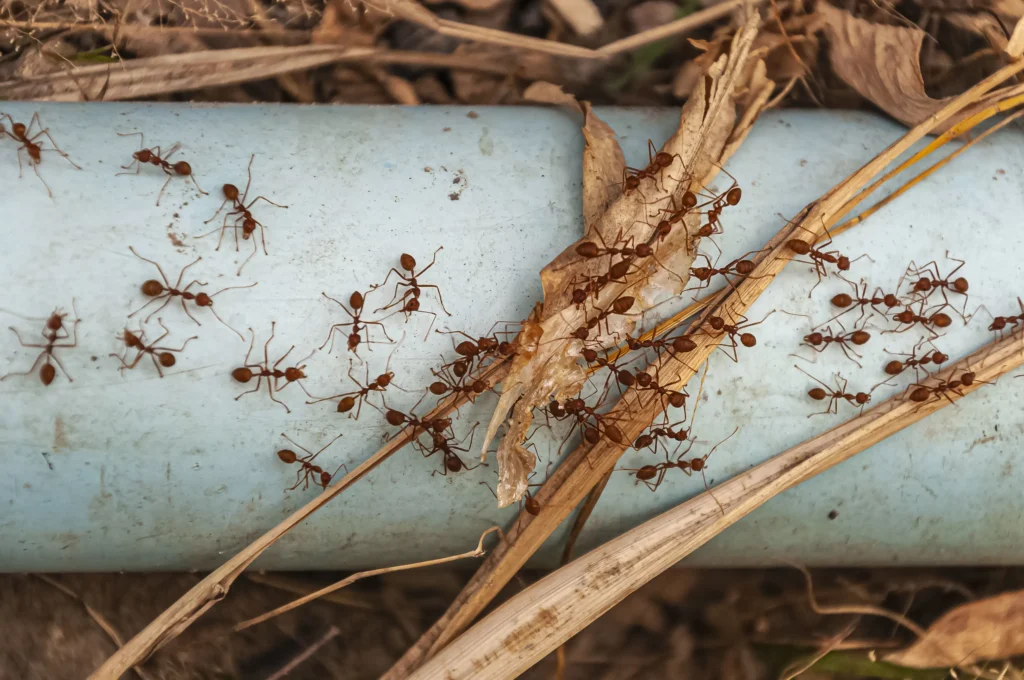
Ant Tips
Toronto Neighbourhood-Specific Ant Tips
The Annex, Cabbagetown, Roncesvalles
Scarborough, East York, Don Mills
CityPlace, Liberty Village, Harbourfront
North York, Willowdale, Don Mills
Etobicoke, Long Branch, New Toronto
Homes near the lake have higher moisture, which means higher carpenter ant risk. Check soffits, fascia boards, and any wood trim on the south and west sides of your home where rain exposure is highest.
Control Costs
What Ant Control Costs in Toronto
- Pavement ant treatment: $175–$300 for most homes
- Carpenter ant treatment: $275–$500+ depending on colony extent and number of nesting sites
- Pharaoh ant treatment (apartments/condos): $200–$400 per unit; building-wide programs priced separately
Frequently Asked Questions — Ant Control in Toronto
Can my Toronto landlord refuse to pay for ant treatment?
Are carpenter ants covered by home insurance in Ontario?
Why do I get ants every single spring in my Toronto home?
My Toronto apartment has tiny yellowish ants — should I spray them?
How fast can Pestisect respond to an ant call in Toronto?
We offer same-day and next-day appointments across all Toronto neighbourhoods. Call (647) 924-2753 before 2pm and we can usually schedule a same-day inspection. Our technicians cover all areas — downtown, midtown, North York, Scarborough, East York, Etobicoke, and everything in between.
Related Services in Toronto

Book Your Toronto Ant Inspection
Stop spraying. Start solving. Call us, and we’ll identify what’s actually in your home — and get rid of it.
Call: (647) 924-2753
Email: in**@*******ct.ca
Available: 7 days a week, 8am–8pm
Serving: All Toronto neighbourhoods