
Rat & Mice Control in Mississauga
Mississauga’s rodent pressure comes from two directions: the natural corridors that cut through the city and the built environment that provides food, shelter, and warmth.
The Credit River, Etobicoke Creek, Cooksville Creek, and the Lake Ontario waterfront all provide habitat and travel corridors for Norway rats. These waterways and their associated greenspace give rats food, water, and burrowing sites and every home within 200 metres of these corridors is in the expansion zone.
Meanwhile, house mice are a suburban reality across all of Mississauga. From Erin Mills to Meadowvale to Port Credit — if your home has a gap the diameter of a dime (6mm) anywhere in the building envelope, mice will find it. And in Mississauga’s condo towers, mice enter through underground parking garage connections, utility rooms, and loading docks.
Pestisect provides complete rodent control across Mississauga trapping, exclusion, and monitoring for homes, condos, and commercial properties.
Get Free Quote
Fill out the form below and we’ll get back to you within 24 hours
rat
Rats in Mississauga — The Waterway Factor
Credit River corridor: Norway rats burrow along the riverbanks from Streetsville south to Port Credit. Homes backing onto the Credit River trail, Erindale Park, and Riverwood Conservancy see higher rat activity particularly in fall when rats seek shelter.
Etobicoke Creek: Runs through Malton and into the airport area. Rat burrows along the creek banks service nearby commercial and residential properties.
Storm water management ponds: Mississauga’s newer communities have dozens of SWM ponds those retention ponds in subdivisions. The landscaped berms around these ponds provide excellent burrowing habitat. Homes backing onto SWM ponds in Meadowvale, Churchill Meadows, and Lisgar see more rat activity than homes that don’t.
How rats enter Mississauga homes:
Through weep holes in brick veneer (the small gaps in the brickwork near ground level)
- Through gaps around gas meter connections, AC line-sets, and electrical panels
- By burrowing alongside foundations and entering through cracks
- Through damaged or disconnected dryer vents and exhaust vents
- Via underground parking garages in condos from the garage into utility rooms and up through the building
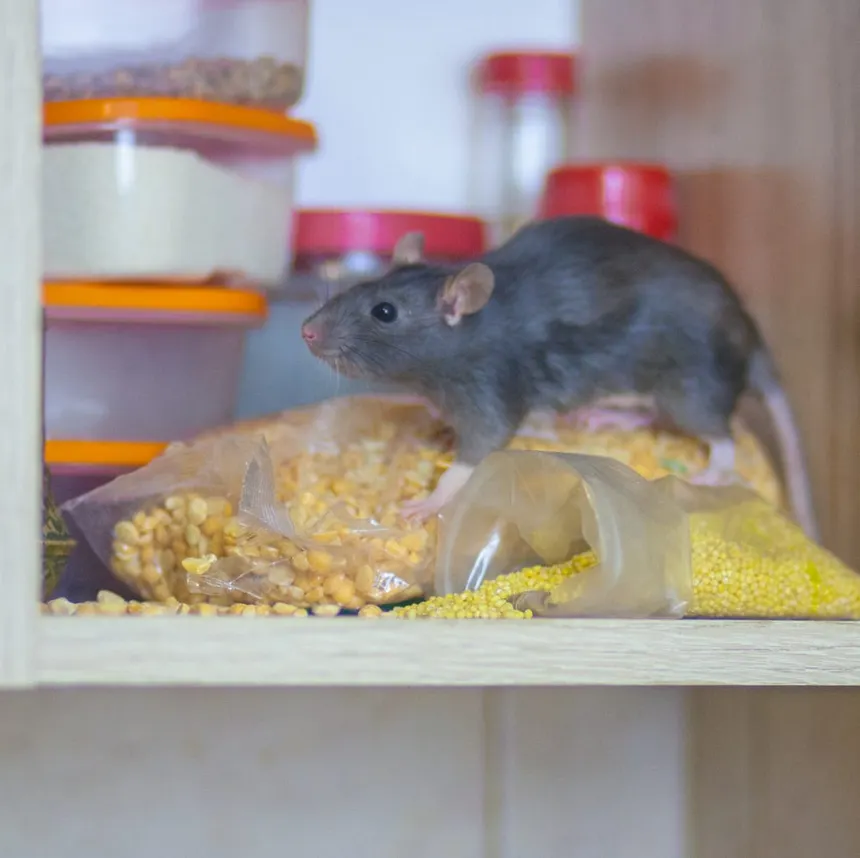

Entry point
Mice in Mississauga Homes — The Entry Point Problem
Mississauga-specific entry patterns:
Erin Mills, Churchill Meadows, Meadowvale (1985–2010 homes): Garage door seals at end of life. Utility penetrations degrading. Mice enter through garages and follow walls to kitchens and pantries.
Port Credit, Clarkson, Lakeview (1940s–1960s homes): Original construction has numerous small gaps. Weep holes, foundation vents, and deteriorated window frames provide entry. Older stone or rubble foundations have more gaps than modern poured concrete.
Square One, Hurontario condos: Mice enter through underground parking, utility rooms, and cable/telecom penetrations in common areas. Once inside the building, they travel through wall cavities.
Streetsville, Cooksville: Mix of older homes with settling gaps and commercial areas providing food sources.
Our Process
Our Rodent Control Process
Step 1 — Perimeter Inspection
Full exterior walk checking: foundation, weep holes, utility penetrations, gas meter connections, AC line-sets, dryer vents, garage door seals, soffit-to-fascia transitions, and roofline gaps.
Step 2 — Interior Assessment
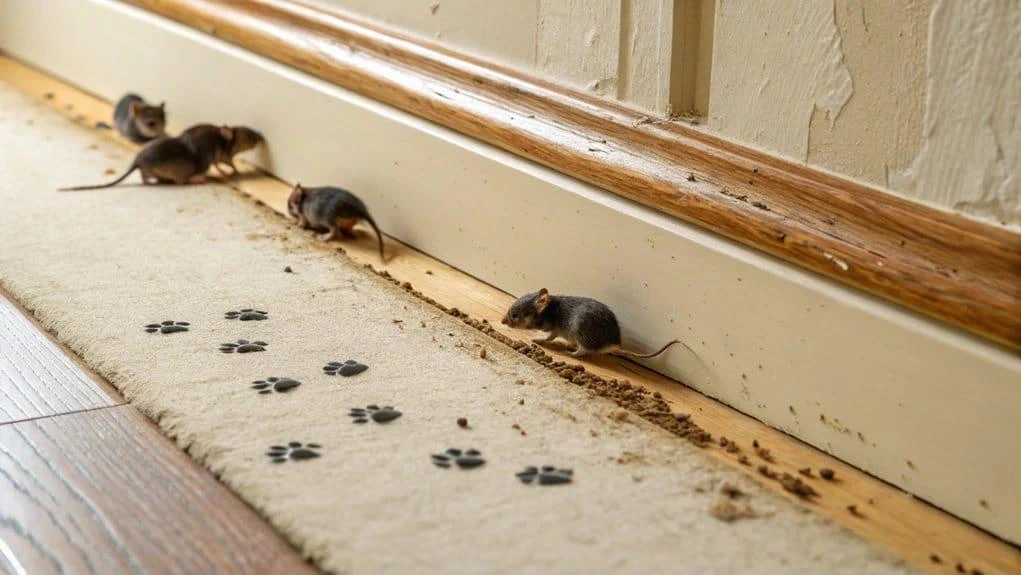
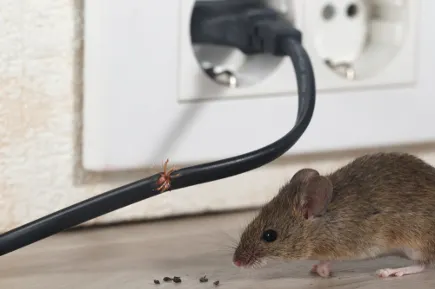
Droppings, gnaw marks, grease trails, and nesting material. Mouse droppings are 3–6mm rice-shaped pellets. Rat droppings are 18–20mm capsule-shaped. The species determines the strategy.
Step 3 — Trapping + Baiting
Snap traps along active runways for both species. Exterior tamper-resistant bait stations for rats. Interior bait is avoided in residential settings to prevent wall-death odour issues.
Step 4 — Exclusion
Every entry point sealed with appropriate materials: - Steel wool + caulk for small gaps - Hardware cloth for weep holes and foundation vents - Sheet metal for larger openings - Commercial-grade garage door sweeps - Dryer vent covers with pest-resistant flaps
Step 5 — Follow-Up
Return in 2–4 weeks. Check traps, confirm activity cessation, complete exclusion.
Rodent control
Rodent Control in Mississauga Condos
Mice in Mississauga condos arrive through underground parking garages, utility rooms, and loading dock areas. Once inside, they travel through wall cavities and cable conduits.
What we do for Mississauga condo buildings:
Inspect common areas
Parking garage, utility rooms, garbage rooms, loading dock
Identify building
level entry points and seal them
Place monitoring stations on affected floors
Coordinate with property management for building-wide exclusion
treatment costs
What Rodent Control Costs in Mississauga
Service
Typical Range
$300–$600
Rodents guide
Mississauga Neighbourhood Rodent Guide
Port Credit, Clarkson, Lakeview: Older homes near the Credit River and Lake Ontario. Highest rat pressure in Mississauga. Carpenter ant and rodent issues often overlap both are attracted to moisture-damaged wood. Mouse entry through original construction gaps.
Meadowvale, Churchill Meadows, Lisgar: Suburban homes with SWM pond proximity. Rat activity concentrated around homes backing onto ponds and conservation corridors. Mice enter through aging garage door seals and utility penetrations.
Erin Mills, Erindale: Established homes from the 1980s–90s. Mouse entry through deteriorating garage infrastructure. Proximity to Erindale Park and Credit River increases rat pressure for adjacent properties.
Square One, Hurontario, City Centre: Condo buildings mice enter through parking garages and common areas. Building-level exclusion is the solution, not unit-level trapping.
Malton, Morning Star: Older apartment buildings and proximity to Etobicoke Creek. Mix of rat and mouse activity. Commercial areas add food-source pressure.
Related Services
Cockroach control services are essential for both residential and commercial properties in Toronto.
Frequently Asked Questions
Why are rats common near the Credit River in Mississauga?
How do mice get into Mississauga condos on upper floors?
Do storm water ponds attract rats in Mississauga?
Should I seal all the holes before trapping mice?
How long does it take to get rid of mice in Mississauga?

Book Rat & Mice Removal in
Mississauga Today
Don’t let rodents take over your property. Our expert team in Mississauga is ready to provide fast, effective, and long-lasting pest control solutions.
Call: (647) 924-2753
Email: in**@*******ct.ca