
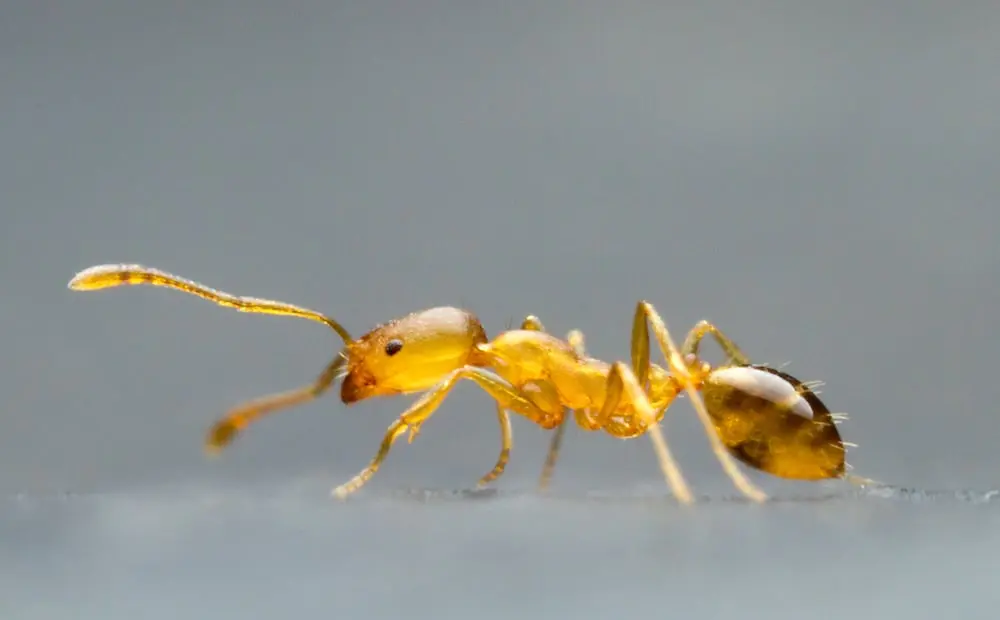
Does Spraying Pharaoh Ants Make Them Worse? (The Budding Effect)
If you are dealing with tiny, yellow or light brown ants in your Toronto condo or kitchen, your first instinct is probably to grab a can of Raid or a similar over-the-counter insect spray. While this works well for common pavement ants or solitary spiders, doing this to Pharaoh ants is a massive mistake.
In fact, spraying them guarantees that your pest problem will multiply within days.
If you are wondering why your ant problem seems to be spreading from the kitchen into your bathrooms and bedrooms, this guide explains exactly what goes wrong when you spray Pharaoh ants and how professionals actually eliminate them.
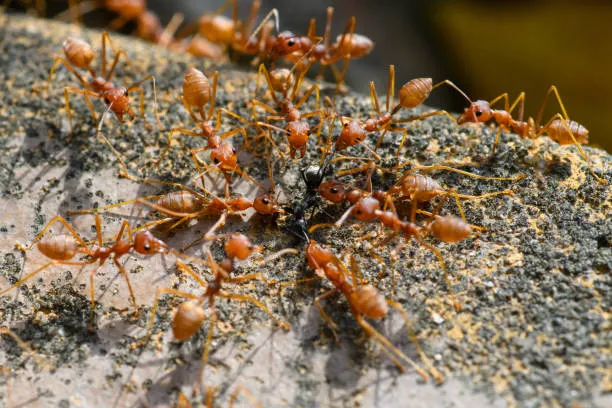
Does Spraying Pharaoh Ants Make Them Worse?
Yes, spraying Pharaoh ants makes the infestation significantly worse. When Pharaoh ants detect chemical stress from insecticide sprays, the colony enters a panic state and fractures. Multiple queens will take a group of worker ants and “bud” off into your walls, splitting one single nest into three or four separate colonies throughout your home.
This rapid multiplication mechanism—called “budding”—is why standard pest control methods fail against this specific species.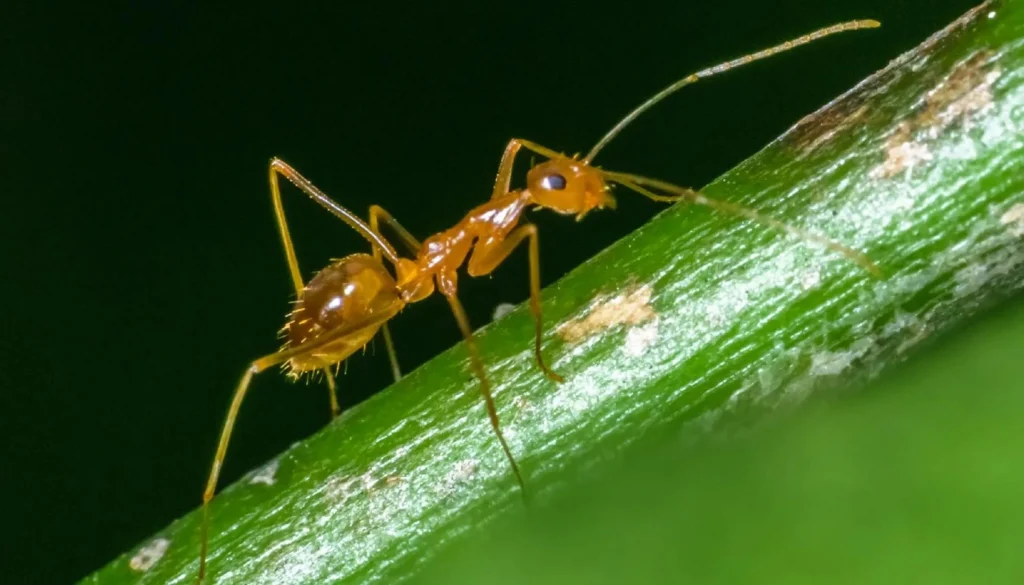
The Correct Way to Exterminate Pharaoh Ants
To successfully eliminate Pharaoh ants, you must exploit their foraging behavior against them rather than killing them on contact.
Identify the Species Correctly
Pharaoh ants are very small (about 2 mm long) and range in color from yellow to light red/brown. They are notoriously attracted to sweet and greasy foods. Proper identification is the mandatory first step before any treatment begins.
The Professional Gel Bait Protocol
Licensed Pestisect technicians do not use aerosol sprays on Pharaoh ants. Instead, we use highly attractive, slow-acting gel baits.
- The Lure: The bait is designed to mimic their preferred food source (proteins or sugars, depending on the season).
- The Trap: The worker ants eat the bait but do not die immediately. Because they are social insects, they stomach the bait and carry it directly back into the wall void to feed the queens and the larvae.
- The Collapse: The slow-acting active ingredient disrupts the colony from the inside out. Once the queens die, the entire colony collapses.
Patience is Required
Baiting takes longer than spraying. You will actually see *more* ants over the first 48 hours as they swarm the bait. This is exactly what we want to happen. Usually, the entire population is eradicated within two to four weeks.
What is Pharaoh Ant "Budding"?
Unlike many other ant species that only have one queen per colony, a Pharaoh ant colony is highly democratic. A single nest can contain hundreds of reproductive queens.
When you spray a toxic repellent chemical:
- The few foraging ants you sprayed die instantly.
- The surviving ants secrete a chemical pheromone back to the nest to warn the colony of a toxic threat.
- The colony immediately splinters. Queens grab larvae and scatter through your wall voids, plumbing chases, and electrical outlets.
- What was once a localized problem under your kitchen sink is now three new nests: one behind your dishwasher, one in your bathroom vanity, and another in your bedroom wall.
Call to Action: Stop Spraying and Start Eradicating!
Are you seeing tiny yellow ants near your water sources or in your condo? Stop spraying them immediately! Every day you spray is a day they multiply.
Frequently Asked Questions
Can Pharaoh ants bite humans?
No. While they have mandibles, Pharaoh ants are too small to bite or sting humans. However, they are a significant health hazard because they easily transmit pathogens like salmonella and streptococcus while traveling over food preparation surfaces.
Are landlords responsible for pest control in Ontario?
Yes. Under Ontario’s Residential Tenancies Act, it is the landlord’s responsibility to maintain a safe and habitable living environment, which includes covering the cost of professional pest control for bed bugs, cockroaches, and ants.
Do ultrasonic pest repellers actually work?
No, ultrasonic pest repellers do not work for ants (or most other pests). Numerous scientific studies have shown that insects quickly adapt to the high-frequency sounds, rendering the devices completely ineffective for long-term pest management.
How did mice get into my house?
Mice enter homes by squeezing through gaps as small as a dime (1/4 inch) in your weep holes, foundation cracks, torn window screens, and around utility lines. Once inside, they follow pheromone trails left by other mice, which is why professional interior exclusion sealing is necessary.