
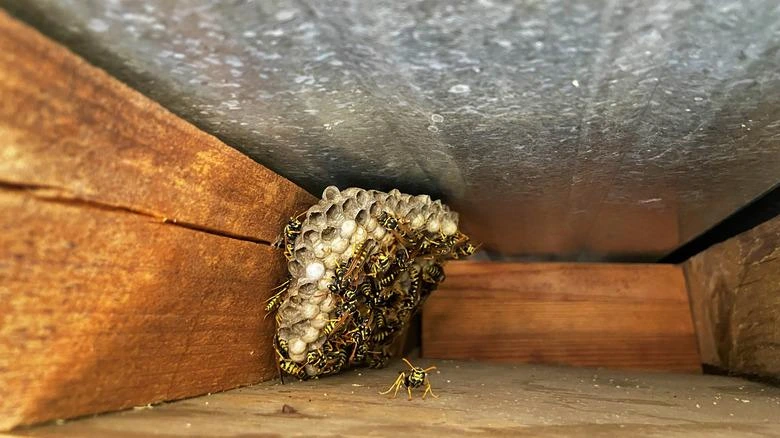
How do I exterminate a wasp nest built inside a brick wall void?
Can yellowjackets chew through interior drywall?
How do I get rid of wasps nesting behind home siding?
You get rid of wasps nesting behind siding by injecting a registered, dry commercial insecticide dust behind the panels using a specialized long-reach duster. Do not try to spray liquid store-bought aerosol into the siding, as it can cause moisture damage and electrical shorts.
Liquid aerosols coat the siding panels but fail to reach the nest cavity behind them. Furthermore, wet sprays quickly wash away or dry out, losing their efficacy. Dry insecticidal dust remains suspended inside the siding void, ensuring that all active and returning foragers are exposed to the active ingredient.
Common Structural Wasp Entry Points in Ontario Homes
| Structural Feature | Primary Purpose | How Wasps Exploit It | Recommended Correction (Exclusion) |
|---|---|---|---|
| Weep Holes | Allow ventilation and drainage behind brick veneer. | Direct gateway to the wall cavity. | Install stainless steel mesh weep hole covers. |
| Soffits & Fascia | Vent the attic space under the roofline. | Gaps in the fascia board allow entry into the attic or eaves. | Repair warped boards; install fine wire insect mesh. |
| Window/Door Caulking | Seals structural frames from drafts. | Weathered, cracked caulk provides entry into wall frames. | Remove old caulk; apply premium exterior silicone. |
| Utility Penetrations | Routes for AC pipes, cables, and vents. | Missing sealant around pipes allows entry into basement walls. | Seal gaps with expanding foam and copper mesh. |
The Drywall Chewing Hazard: A Homeowner’s Nightmare
1. The Mandible Mechanics
Wasps build their nests by chewing weathered wood fibers, mixing them with saliva, and spitting them out to form paper cells.
- Their mouthparts (mandibles) are designed for heavy scraping and chewing.
- The Problem: Gypsum drywall, paint, and wallpaper are extremely soft compared to weathered wood. A colony of yellowjackets can chew through a standard 1/2-inch sheet of drywall in less than 24 hours.
2. The Internal Swarm
Once the wasps chew through the drywall, they will emerge into the interior of your home.
- Because they are in a state of panic, they will be highly aggressive and attack anything in the room.
- The Cost: What started as a simple, low-cost exterior weep hole treatment turns into a high-cost interior emergency, requiring immediate evacuation, emergency pest control, and drywall repair/painting.
Flight Traffic Analysis: Estimating Nest Size & Depth
- The 60-Second Forager Count: Stand at a safe distance and count the number of wasps exiting the hole over exactly 60 seconds during peak daylight (12:00 PM to 2:00 PM).
- Less than 5 exits/min: Indicates a newly established nest or a small paper wasp cluster (low risk, early season).
- 10 to 30 exits/min: Indicates a mature, active colony of several hundred yellowjackets.
- More than 50 exits/min: Indicates a massive, fully developed nest containing thousands of worker wasps (high risk, late season).
- Secondary Exit Points: Check the interior baseboards, electrical outlets, and basement rim joists directly behind the exterior entry point. If you notice even a single wasp crawling indoors or hear faint chewing sounds, the nest has reached structural drywall and requires immediate commercial dusting.
The Moisture & Mold Hazard: Why Wet Aerosols Damage Walls
- Wood Stud Rot: Standard wall cavities contain wood framing studs, insulation (fiberglass or cellulose), and structural sheathing. Flooding this space with water-based pesticide foams creates pockets of trapped moisture that cannot evaporate quickly.
- Mold & Fungal Growth: Dark, wet wall voids are breeding grounds for mold. The petroleum solvents in retail sprays can degrade insulation and create strong, persistent chemical odors that penetrate into your living rooms.
- Attracting Secondary Pests: The damp, decaying organic matter of a dead wasp nest—combined with wet chemical residues—attracts secondary scavengers like carpet beetles, larder beetles, and wood-boring carpenter ants.
- The Dry Dust Advantage: Dry commercial dusts (like permethrin dust) do not add moisture to the wall void. They remain dry, powdery, and active for months, ensuring that any late-hatching wasp pupae are eliminated without creating structural rot or attracting secondary pests.
The Professional Dry Dust Injection Protocol
1. Flight Path Monitoring
2. Dry Dust Selection
3. Pressurized Application
4. The Transfer Effect
5. Post-Treatment Exclusion
Long-Term Structural Exclusion Guide
The Weep Hole Guard Checklist
Weep holes are crucial for allowing brick walls to drain condensation. Never fill weep holes with silicone caulk, expandable foam, or steel wool.
Caulk & Foam Blockage: Blocks drainage, causing water to build up behind your bricks and leak into your basement or decay wood framing.
Steel Wool Rust: Steel wool rusts rapidly when exposed to rain, leaving dark, permanent orange iron stains down your brick facade.
The Correct Fix: Install stainless steel wire mesh weep hole covers. These clips snap into place, allowing moisture and air to vent freely while creating an impenetrable physical barrier against wasps, spiders, and mice.
Soffit, Siding, and Utility Seals
- Siding Gaps: Inspect the J-channel trim where vinyl siding meets windows and doors. Seal any gaps wider than 1/4 inch using exterior-grade silicone caulk.
- Inspect Attic Soffits: Attic soffit vents can warp over time. Repair or replace loose panels, and ensure attic vents are covered with fine wire mesh.
- Seal Utility Entries: Seal the entry holes for air conditioning lines, gas pipes, and electrical conduit with copper mesh (copper stuff-fit) and expanding foam. Wasps cannot chew through copper mesh.